Soakin Loam 2024 is in Nanaimo BC on February 16th. The Soakin Loam Arborist Workshop is a showcase of voices and ideas from within the arborist community.
Tickets are sold out. You can get on the waiting list by sending your information using the contact form at the bottom of this page.
Location
Soakin loam will be held on the traditional territory of the Snuneymuxw First Nation People at the Nanaimo Curling Club on February 16th, 2024
2024 Presentations
Dylan Saito (Portland, OR)
This will be an arborist perspective into setting intentions using mindful thinking processes to adapt, create, and apply mindfulness and intention to our industry and beyond. When you set mindful intentions for yourself, you shift the focus from the outcome to the actions you are willing to take to make your dreams and desires come true.
An intention is a positive call to action about something you want to do, rather than something you don't want to do but feel that you “should.” Knowing why you pay attention to certain things and overlook others can help you clarify what steps you need to take to make an impact in your work, life, and on the world. Sometimes we get distracted by our tendency to strategize out of the present moment, and this is where intention can come in.
Katie Breukers (Jewett Mills, NB)
Climate change is contributing to a poorly understood surge in fungal pathogens. The deterioration of tree health has led to an escalation in tree removals. This, in turn, has resulted in decreases in canopy cover, connectivity, and diversity in urban forests. Soil communities' health and diversity are regularly overlooked during tree assessments.
This discussion will explore findings from both preliminary and ongoing research in New Brunswick, complemented by additional studies from various urban settings. The analysis focuses on population and environmental dynamics, evaluating the resilience of forest communities and their capacity to withstand pathogen outbreaks. The research indicates a necessary shift in urban forest management, urging a revaluation of current perspectives on species selection, tree risk, and tree assessment to encourage a robust and resilient urban forest.
Matt Follett (Montreal, QC)
Ryan Senechal (Victoria, BC)
This exciting research presentation will outline results from recent rigging experiments focused on exploring concepts in both physics and tree biomechanics and how we can incorporate these to improve on climber safety. This presentation includes previously presented work (TCIA Atlanta, ISA Malmo, ISAO London), as well as exciting new results from a recent collaborative project – the partners include University of Quebec at Montreal, University of British Columbia, and the City of North Vancouver. In this new study we focused on a topic with significant gaps in both literature and anecdotal evidence; the effect of notch angle on applied bending moment to a standing stem.
Drue Morris (Seattle, WA)
Andrea Starbird (Seattle, WA)
Join us for a focused talk on expanding your skill set in arboriculture and urban forestry. We'll explore why it's crucial to develop both technical abilities and soft skills to stay versatile and resilient in our industry. Learn how diversifying your skills can lead to a longer, more varied career and help prevent burnout. Discover how to adapt and grow at different career stages by leveraging your strengths. This discussion is about more than just job skills; it's about building a sustainable and satisfying career path in the ever-evolving world of tree care.
Trevor Coey (Victoria, BC)
The Arborist and the Ego: How ego can affect decision making and help navigate a life altering tree climbing injury.
Emiliano Wekwert (Edmonton, AB)
Tiger Devine (Vancouver, BC)
How cargo bikes can transform tree care, make it a leading and revolutionary industry that works within an ecologically sustainable future.
Envision a future in which cargo bikes emerge as the eco-friendly, unassuming workhorses of our industry. We commence by unveiling compelling statistics regarding motor vehicle-related impacts and their far-reaching consequences on our cities, ecosystems, and trees. We will explore how bicycles can play a pivotal role in mitigating these issues, but not before addressing the pressing challenges posed by climate change.
2023 Presenters
Katie Breukers (Jewett Mills, NB)
The Significance of Biodiversity in Urban Landscapes and Its Limitations: Current and Emerging Research, and Global Examples.
Urban forests provide critical ecosystem services for cities while also generating benefits for human health and well-being. Exponential increases in tree pests in urban landscapes mean urban-tree monocultures are unsustainable. Planning requires thinking beyond “right tree, right place”. Research calls for implementing species diversification plans which include diverse tree and flowing plant species - essential to fostering a healthy and resilient urban forest.
This discussion focuses on the significance of biodiversity in urban landscapes, its limitations, current and emerging research, and global examples. It invites us to consider how, as professionals, we must invite collaboration on infrastructure design, promote a shared role of tree stewardship amongst arborists and researchers/conservationists, and increase public engagement and education.
Bio:
Katie Breukers is an ISA certified Arborist, owner of Tangled Trees Arboriculture and currently studying Environment and Natural Resources with a concentration in conservation at the University of New Brunswick. She has visited historic urban trees and forests across Canada and built her business around preservation of urban old growth and wildlife habitat. Her career now concentrates on sustaining our urban forests in response to climate crisis. She is curating her learning and work on a podcast: Tangled Trees - All Things Arboriculture.
Matt Follett (Montreal, QC)
Load Distribution in Rigging Operations: Mitigating forces in negative rigging (Bonus: climbing anchors and vectors)
Tree removal in the urban environment is a complex task involving significant forces which must be mitigated to reduce the likelihood of structural failure and subsequent property damage or injury to workers. This presentation will detail several research projects funded in part by the TREE Fund that examined how loads can be mitigated in rigging and climbing operations. Part 1 will look at the effect of rigging thimbles vs. traditional rotating blocks and how these affect forces within the tree and the rigging system. Part 2 will detail the results of an experiment that investigated the effect of aerodynamic damping on stem loading, answering the question, “Does retaining limbs below the rigging point reduce stem strain?” Finally, Part 3 will examine how different climbing systems affect the load placed on the anchor point and how that is transferred through the tree. The results of these projects have direct implications for day-to-day operations.
Bio:
With over 25 years’ experience as a practicing arborist, and currently pursuing a PhD in tree biomechanics, Matt Follett has a strong interest in the technical aspects of preserving large trees in the urban setting. His long climbing career has also influenced his dedication to climber safety, and a research interest in the loads associated with both climbing practices and technical removal operations. Matt has taught practical arboriculture and tree climbing since 2001; worked in Southern Ontario, England, Seattle, Halifax and Montreal; and has presented on arboricultural topics at regional and international conferences, research symposia, and private training courses.
Kristine Kirkby, Ryan Murphy (BC)
Managing Raptors in Arboriculture
Considerations in managing for Raptors in Arboriculture
-
What are raptors and why do they deserve special consideration?
-
What legal protections are in place.
-
How to navigate these and which apply and when
-
Species you may encounter and their requisite breeding habitat
-
Breeding timing
-
Managing around raptors
-
Permits
-
Relocating nests
-
Wildlife tree creation
-
Pruning considerations
-
Special interest applications
-
Research climbing
-
Rescue
-
Nest cameras
Bio:
Kristine is a Registered Professional Biologist and a master bander of raptors. She has a BSc in Wildlife Biology, and a MSc in Environmental Practice. She has focused on birds of prey for the majority of her career, through conservation, research, management, and husbandry (falconry). Kristine learned the basics of tree climbing through an ArborCanada course, as well as through recreation with trained climbing arborists, in order to access raptor nests for banding, biological sampling, parasite prevention, and installing nest cameras.
Ryan has worked in the field of Arboriculture since 2003. He has been ISA certified for much of tthat time and has worked in multiple capacities; from climbing arborist to consulting. In the late 2000’s he finished a BSc in environmental science. Since that time he has maintained the two careers in parallel. Alongside arboriculture Ryan also works as a wildlife biologist specializing and birds, raptors in particular. On occasion these two career paths cross, climbing up to raptor nests for camera installations, DNA studies, or banding and toxicology studies.
ISA Arborist & TRAQ
BSc Environmental Science (Royal Roads)
RBTech (College of applied biology)
Alex Scott (Comox Valley, BC)
One Liners (not an SRS seminar)
Reflections of small pieces of advice received over a 25 year career in Forestry and Arboriculture that solidified concepts of safety, comfort and efficiency in the speaker’s mind.
Bio:
Alex holds a Bachelor of Arts degree in geography from the University of Victoria. He has been an ISA certified arborist since 2007 and ISA TRACE/Tree Risk Assessment Qualified since 2008. He also holds ITA Arborist Technician and Climbing Arborist qualifications, as well as being a BC Forest Safety Council Certified Faller. In addition, he is certified by the Wildlife Dangerous Tree Assessor Certificate Program (Parks). Alex is currently working as an arborist for the City of Campbell River.
Chris Milller, Worksafe BC (BC)
Part 26.12.0 - Pre-Climb Tree Assessments, and the
Tree Climbing Plan
Dylan Saito (Portland, OR)
Arborist: The People's Perspective
When you think "Arborist", what is the first image you see? An industrial athlete dawned in outdoor gear, chainsaws, and wood chippers? What about the passions behind them? We are human beings that care for organic structures, provide a sense of safety to the community, improve environmental awareness and benefits, and renew sustainable landscapes. With the pandemic and climate change, the awareness of our immediate and natural surroundings appears to have increased drastically. What kind of new stressors are you seeing in your day to day life with Arboriculture?
Bio:
Hi my name is Dylan Saito! I have been an Arborist for 18 years now, and it is my preferred lifestyle choice. I found Arboriculture by letting go of traditional employment searches, and longing for nature in my work. I have met some of the most wonderful people along the way! I am currently a Tree Inspector for the City of Portland (OR, US) Urban Forestry division. I was previously the Editor of the PNW-ISA chapter newsletter, and have been a judge for the PNW-ISA regional tree climbing competitions for about 14 years. I am an ISA Certified Arborist with the "TRAQ". I have an Oregon Public Pesticide Applicator license to assess trees for plant health care needs and prescribe/permit approved treatments, but I do not apply any chemicals. I have FEMA incident command and management certifications, Electrical Hazards Awareness Program certified, Oregon Pest Detection, and Adult Mental Health First Aid. I love what I do, and I love helping others get into the field or to guide them to sustainability or improvement. My goal is to help create a better industry by connecting people with the Urban Forest, in hopes it brings further awareness of the importance of all our forests/trees.
Laura Mantin (Vancouver, BC)
Education and Career Pathways in Arboriculture and Urban Forestry
Arboriculture and Urban Forestry is an excellent space for those seeking continuous learning and personal growth. However, opportunities for education and career advancement can be difficult to navigate, especially for arborists working full-time. Join Laura as we explore educational and professional pathways for those new to arboriculture, those looking to upgrade their skills, or arborists like you who just never want to stop learning. This talk will outline existing training programs, certifications, and higher education opportunities in Canada and further afield. Contrast the benefits and potential outcomes of each, as well as the importance of connecting arboricultural professionals and academics.
Bio:
Laura Mantin is a Bachelor of Urban Forestry student at the University of British Columbia, and a graduate of Humber College Arboriculture and Fleming College Urban Forestry. Since 2015, she has worked as a climbing arborist, crew leader and consultant in Ontario, British Columbia, and Aotearoa New Zealand. She is passionate about the arboriculture industry, having competed in and volunteered at numerous tree climbing competitions, and has volunteered with the Women in Arboriculture Ontario committee, the SkillsOntario Young Women in Trades Conference, and the UBC Forestry Undergraduate Society. Outside of her studies, she now works part-time at Royal Wood Tree Service in Ladner, BC.
Rebecca Byrne, Linsay Kearns, BCWITT (BC)
Equity is for Everyone
Flipchart 1, 2, 3
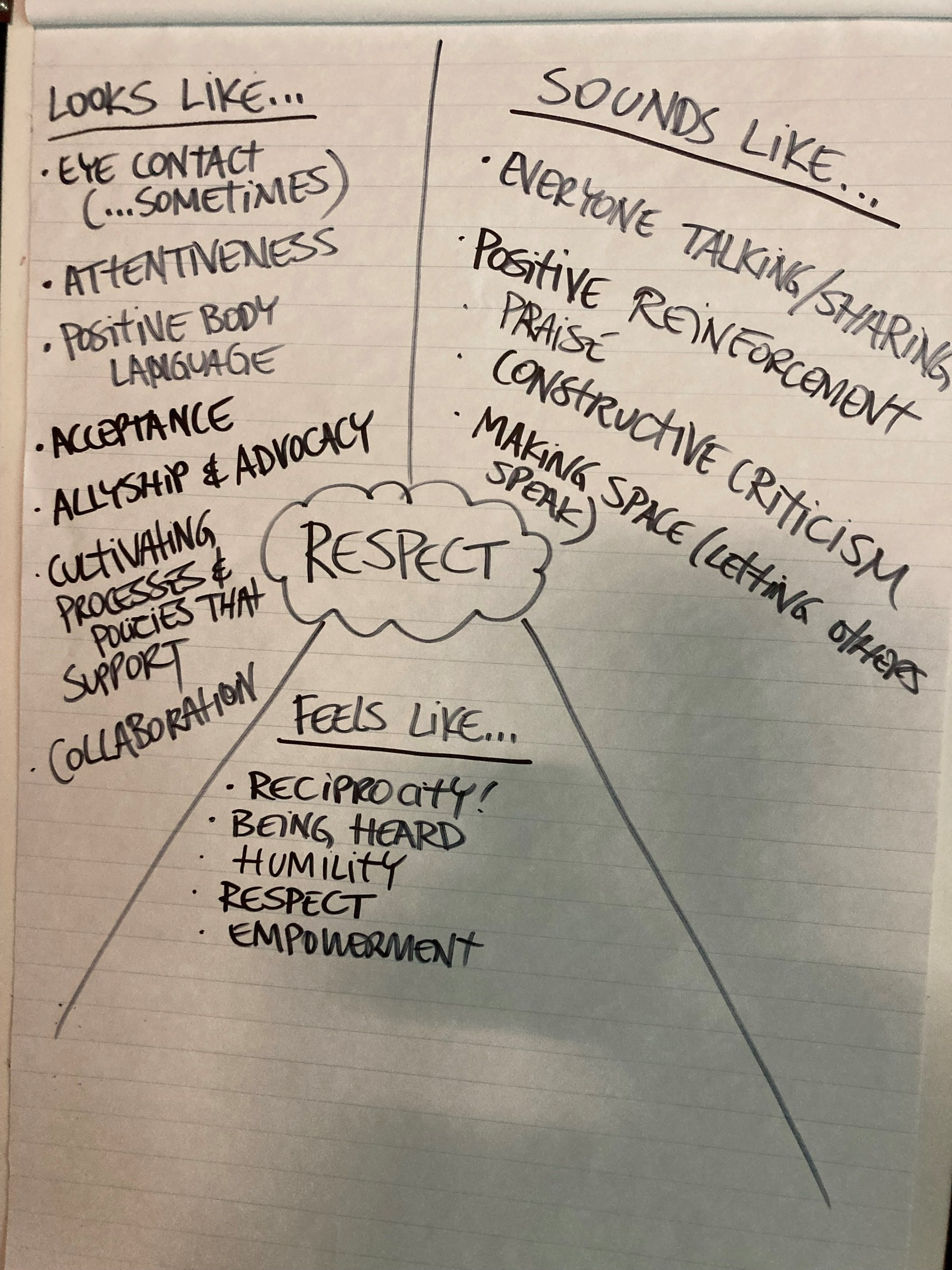
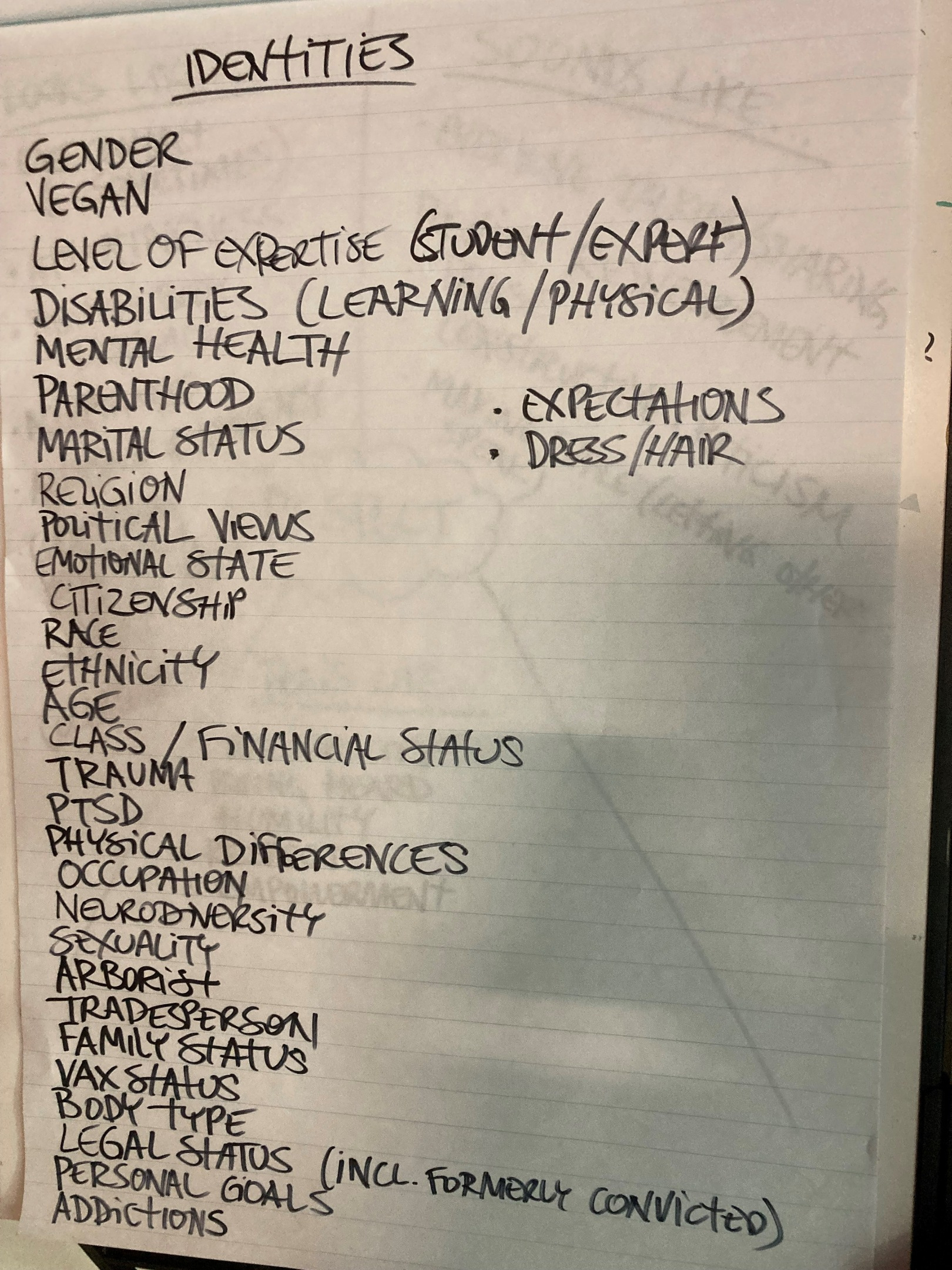
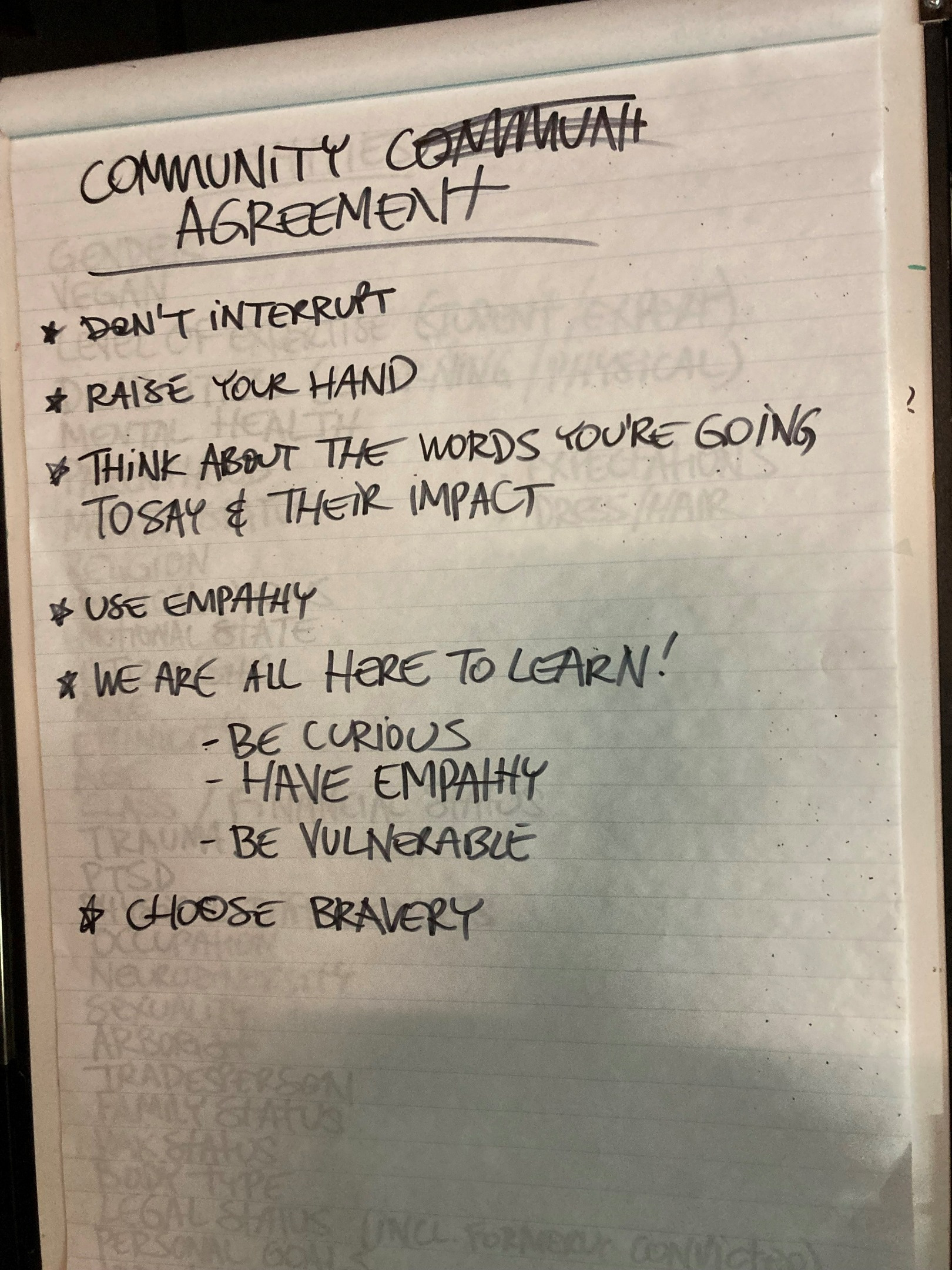
Talking about equity issues can be hard, and that’s okay: Challenging topics are worthwhile topics. Join us for a fun and interactive introduction to equity, diversity, and inclusion and why they matter for all of us in every workplace. We will define words and structures using real life examples, and work together to understand how we can create and support workplaces that are healthy & safe for everyone, and a job sector that is welcoming & resilient.
Bio:
Rebecca Byrne is an ISA Certified Arborist, Tree Risk Assessor and Apprentice Utility Arborist, as well as a Certified Horticulturist. Her work and life as an urban dweller has taught her the value of the urban forest in forming the fabric of communities and in relearning our connections to the natural world. She is invested in animal welfare, in building through mentorship an inclusive health and safety culture for all workers and in reconciliation within her local community.
Lindsay Kearns is a Red Seal electrician and a coordinator with BCCWITT, where her work focuses on outreach, leadership and event coordination for the growing network of tradespeople from underrepresented groups across BC. She is a proud union member, queer person, and parent, with a background in community organizing, urban geography, and food security issues.